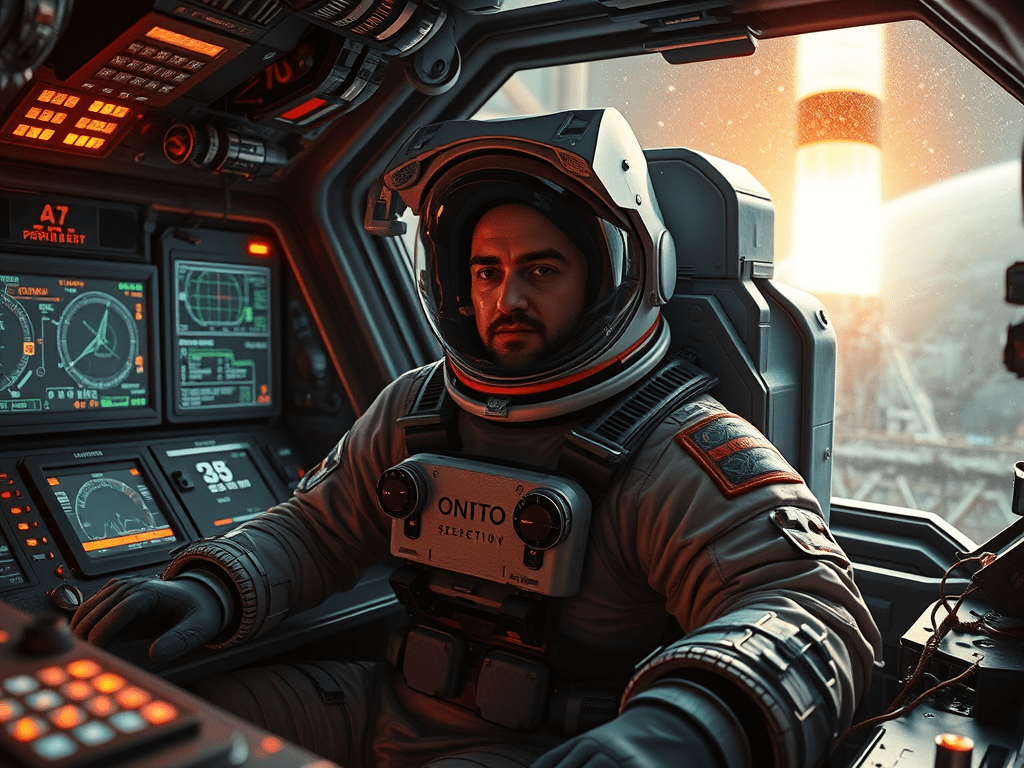
Launching a rocket into space is an intricate and demanding process that involves meticulous planning, extensive training, and split-second execution. For the pilot or astronaut on board, the journey begins long before the countdown clock starts. Here’s a detailed look at what it typically takes to launch a rocket and the role of the astronaut in the cockpit.
Pre-Launch Preparation
Months of Training
Astronauts undergo rigorous training that starts months, if not years, before the launch. They familiarize themselves with every aspect of the spacecraft, including its systems, controls, and emergency procedures. Training often includes:
- Simulating flight scenarios in mock-ups and virtual reality environments.
- Practicing manual control of the spacecraft in case of system failures.
- Learning to operate life-support systems.
- Undergoing physical conditioning to prepare for the intense forces of launch and space travel.
Medical and Psychological Readiness
In the days leading up to the launch, astronauts go through thorough medical examinations to ensure they are fit for the mission. Psychological readiness is also assessed, as the high-stress environment requires a calm and focused mindset.
Final Briefings and Suit-Up
On the day of the launch, astronauts receive a final briefing from mission control, covering the launch sequence, mission objectives, and contingency plans. They then don their flight suits, which are specially designed to protect them during launch and re-entry.
The Role of the Pilot During Launch
Time Commitment
The preparation for launch on the day itself can take several hours. Astronauts typically arrive at the launch site 6-8 hours before liftoff. Activities during this time include:
- A final medical check-up.
- Dressing in their space suits.
- Traveling to the launch pad and boarding the spacecraft.
- Securing themselves in their seats and conducting pre-flight system checks.
System Checks and Coordination
Once strapped in, astronauts work closely with the mission control team to perform a series of pre-launch system checks. These include:
- Verifying communication systems.
- Checking fuel levels and propulsion systems.
- Ensuring all onboard life-support systems are functional.
While much of the rocket’s operation is automated, astronauts are trained to take over manually if necessary. This includes activating backup systems, troubleshooting issues, or aborting the mission if required.
Key Controls and Procedures
Astronauts interact with an array of controls, switches, and touchscreens. Some of the key actions they might perform include:
- Engaging the launch sequence.
- Monitoring the rocket’s trajectory and system status.
- Switching between automatic and manual modes when required.
The Role of Mission Control
While astronauts play a vital role, much of the rocket’s operation is managed by the ground-based mission control team. Mission control oversees the launch sequence, monitors the rocket’s performance, and provides real-time instructions to the astronauts.
Key responsibilities of mission control include:
- Coordinating the countdown and ignition sequence.
- Monitoring telemetry data to ensure all systems are functioning as expected.
- Advising astronauts on any deviations or anomalies during the flight.
The Launch Sequence
- Countdown: The countdown is a meticulously timed sequence of events, starting hours before liftoff. This includes fueling the rocket, checking all systems, and clearing the launch area.
- Ignition: At T-minus 0, the rocket engines ignite, and the spacecraft begins its ascent.
- Ascent: During the ascent phase, astronauts monitor the spacecraft’s systems and communicate with mission control. Automated systems handle most of the flight, but astronauts are prepared to intervene if necessary.
- Stage Separation: Multi-stage rockets shed parts of the structure as they ascend. This process is automated but closely monitored by both the astronauts and mission control.
- Orbit Insertion: Once the spacecraft reaches its designated orbit, the engines cut off, and the astronauts begin their mission in microgravity.
Conclusion
Launching a rocket is a collaborative effort that relies on the expertise of both astronauts and mission control. While modern spacecraft are equipped with advanced automation, the human element remains critical. Astronauts must be prepared to respond to any situation, ensuring the safety and success of the mission. The combination of extensive training, cutting-edge technology, and seamless teamwork makes space exploration possible, paving the way for humanity’s continued journey into the cosmos.
 Cosmic Watchers
Leave a comment