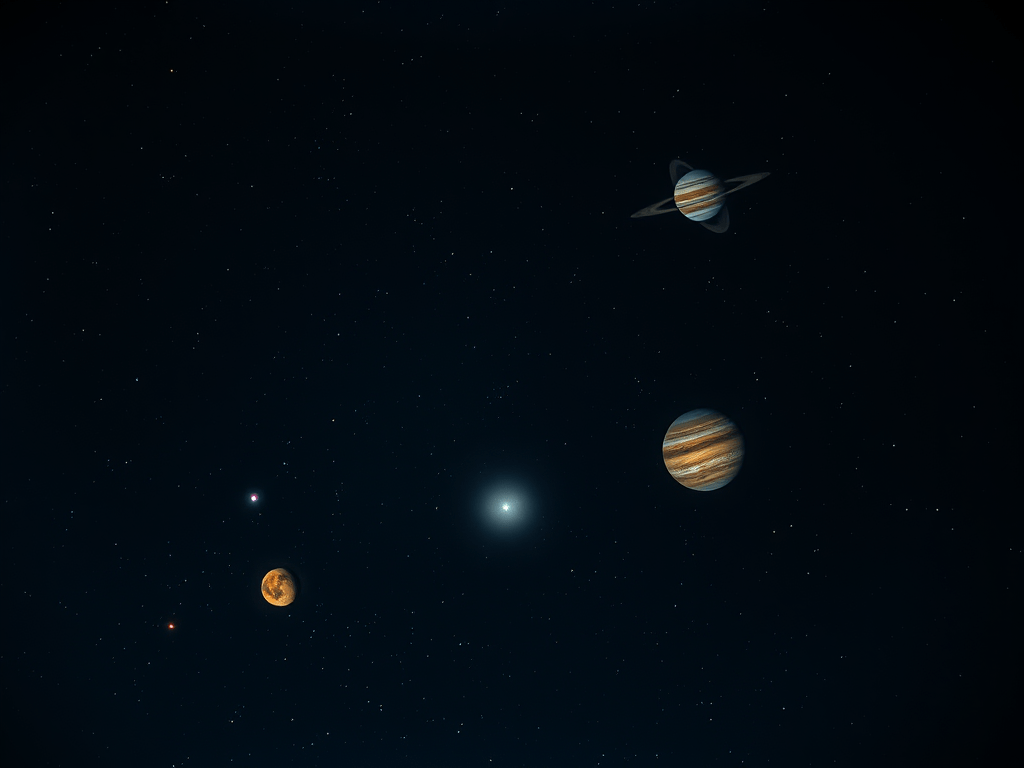
A Celestial Spectacle: The Planetary Alignment of January 2025
Skywatchers are in for a cosmic treat as the night sky will showcase a rare planetary alignment at the end of January 2025. This event, often referred to as a “planetary parade,” will feature six planets—Venus, Saturn, Jupiter, Mars, Uranus, and Neptune—aligning in the evening sky. For stargazing enthusiasts, this is a fantastic opportunity to witness a celestial show that doesn’t happen every year.
What is a Planetary Alignment?
A planetary alignment occurs when planets appear to line up in the sky from our perspective on Earth. While the planets are not physically aligned in space, their positions relative to Earth create the illusion of a lineup. This event is particularly special because it includes six planets, spanning from the inner solar system (Venus and Mars) to the distant ice giants (Uranus and Neptune).
When and Where to Look
The best time to observe this event is during the first couple of hours after sunset. Here’s what to look for:
- Venus and Saturn: These two planets will be the first to catch your eye shortly after sunset. Venus, the brightest of all planets, often called the “evening star,” will dominate the southwestern horizon. Saturn, which recently had a conjunction with Venus on January 18, will appear nearby.
- Jupiter: Look overhead toward the constellation Orion to spot Jupiter, shining brightly as the largest planet in our solar system. Its steady light makes it easy to distinguish from stars.
- Mars: About 90 minutes after sunset, Mars will rise in the eastern sky. Currently at opposition, it is directly opposite the Sun from Earth’s perspective, making it especially bright and reddish in hue.
- Uranus and Neptune: While these distant planets are also part of the alignment, they are not visible to the naked eye. Binoculars or a telescope will help you locate these icy worlds. Using stargazing apps like Stellarium or SkyView can make finding their positions easier.
Viewing Tips for the Best Experience
- Find a Dark Sky Location: Light pollution can obscure your view of the planets. Head to an area with minimal artificial light, such as an open field or elevated spot.
- Check the Weather: Clear skies are essential for viewing. Keep an eye on local weather forecasts to ensure optimal conditions.
- Bring Binoculars or a Telescope: While Venus, Saturn, Jupiter, and Mars can be seen with the naked eye, binoculars or a telescope will greatly enhance your view of Uranus, Neptune, and other celestial details.
- Dress Warmly: January evenings can be chilly, so bundle up to stay comfortable while stargazing.
Why This Event is Special
Planetary alignments are relatively rare, and this particular configuration is a wonderful opportunity for amateur astronomers and casual observers alike to enjoy a connection to the cosmos. The event serves as a reminder of the vastness and beauty of our solar system, inspiring curiosity about the universe.
A Final Note
If you miss this alignment, don’t worry—planetary alignments happen periodically, though they differ in the number and visibility of planets. Still, this is a unique chance to observe six planets together in the same sky, making it a night to remember.
So, grab your binoculars, telescope, or just your eyes, and step outside to witness this awe-inspiring display of celestial mechanics. Happy stargazing! 🌌
 Cosmic Watchers
Leave a comment