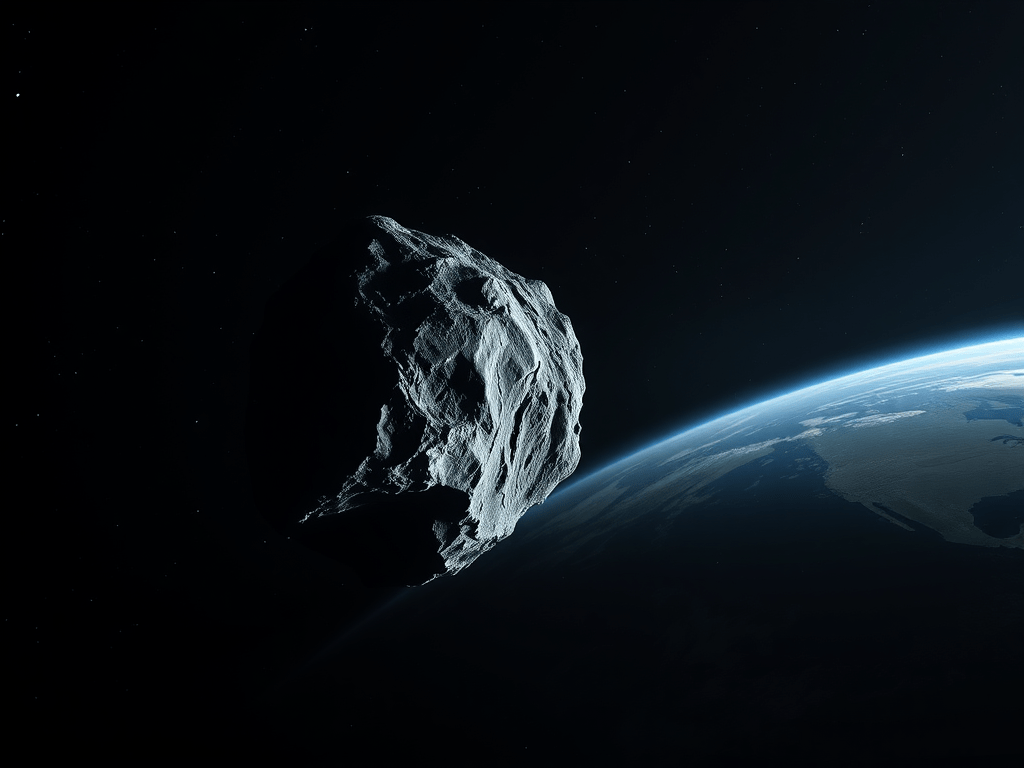
On January 25, 2024, an asteroid passed closer to Earth than expected, reminding us of the ever-present threat of near-Earth objects (NEOs). While not an immediate danger, its unexpected flyby raises concerns about our ability to track asteroids in time.
How Close Did It Get?
The asteroid, designated 2024 YR4, passed within approximately 830,000 km (516,000 miles) of Earth—about twice the distance to the Moon. Though this may seem far, in astronomical terms, it’s a near miss.
How Dangerous Was This Asteroid?
Estimates suggest that 2024 YR4 is between 40 and 100 meters (130 to 330 feet) in diameter. If an asteroid of this size were to enter Earth’s atmosphere, it could cause devastating regional destruction, depending on its composition.
For perspective, the Chelyabinsk meteor that exploded over Russia in 2013 was only 20 meters (65 feet) in diameter but still released energy equivalent to 500 kilotons of TNT, injuring over 1,500 people. A larger asteroid like 2024 YR4 could cause significantly more damage if it were to impact land or explode over a populated area.
Why Was It Missed Until Now?
Despite advancements in asteroid detection, many smaller or fast-moving objects remain undetected until they are close to Earth. Several factors contribute to this:
- Some asteroids approach from angles where Earth-based telescopes have difficulty spotting them.
- They may be obscured by the Sun’s glare, making detection nearly impossible until they are farther away.
- Limited telescope coverage means some regions of the sky are not constantly monitored.
Will This Asteroid Return?
As of now, there is a small chance that 2024 YR4 could come even closer in 2032. Early calculations suggest a 1.2% probability of impact on December 22, 2032, according to NASA and the European Space Agency (ESA).
Astronomers are still gathering data to refine its trajectory. If further observations confirm a higher risk, planetary defense efforts may be needed.
Should We Be More Vigilant?
The January 25, 2024, flyby highlights the importance of asteroid tracking and planetary defense. While this particular asteroid may not be an immediate threat, others could be.
To improve asteroid detection, scientists are developing new space-based telescopes designed to scan the sky for potential threats. Missions like NASA’s DART (Double Asteroid Redirection Test) are testing ways to deflect dangerous asteroids before they become a crisis.
Final Thoughts
While Earth avoided disaster this time, the close pass of 2024 YR4 is a reminder that space is far from empty. As technology improves, so must our vigilance in tracking asteroids that could pose a real danger in the future.
The stars have always been there, watching over us. It’s time we start watching back—before it’s too late.
 Cosmic Watchers
Leave a comment