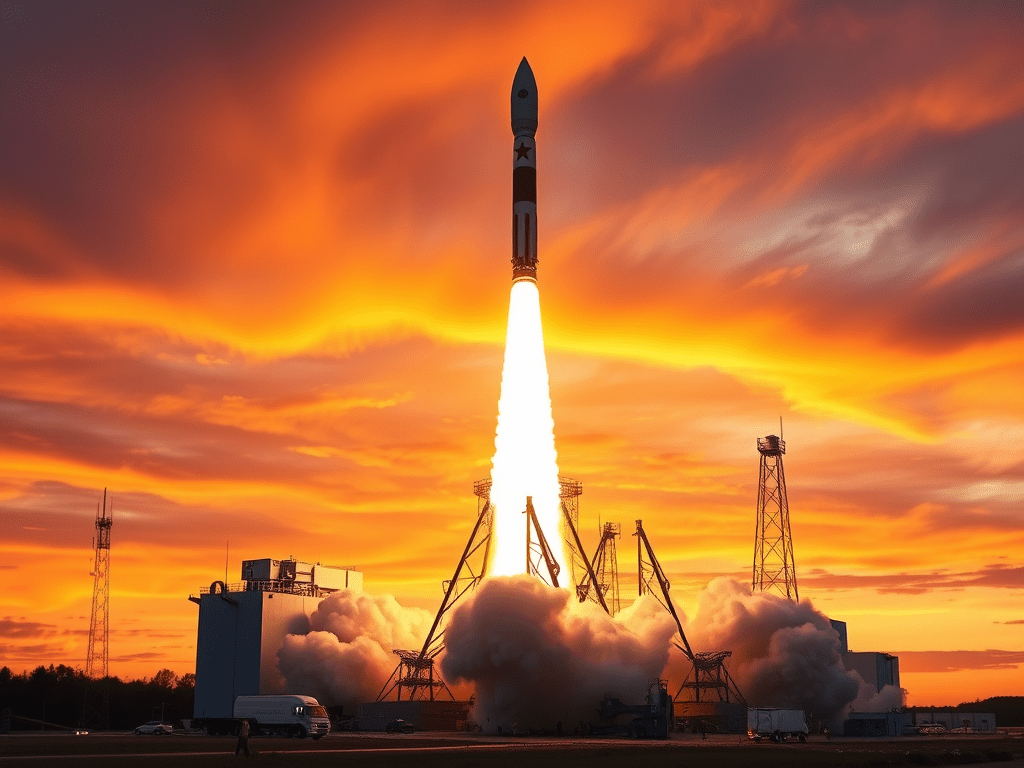
Venus, often referred to as Earth’s “sister planet,” has long been a target of fascination and exploration. While Mars tends to receive the most attention in modern space travel discussions, Venus was one of the first planets humanity attempted to explore. The Soviet Union, in particular, led the charge in interplanetary travel to Venus, sending numerous missions throughout the 1960s and 1970s. While many of these flights failed, some achieved remarkable successes, providing valuable data about one of the most hostile environments in the solar system.
The Harsh Reality of Venus
Unlike Mars, Venus presents an extremely challenging environment for spacecraft. With surface temperatures exceeding 900 degrees Fahrenheit (475 degrees Celsius) and atmospheric pressure 92 times that of Earth, Venus is an inferno. Its thick clouds of sulfuric acid make exploration even more difficult. These extreme conditions have destroyed most landers within hours of arrival, making Venus one of the most difficult planets to explore.
The Soviet Venera Program
The Soviet Union was the first and most persistent nation to send missions to Venus. Under the Venera program, a series of spacecraft were launched to study the planet, starting in the early 1960s. The name “Venera” means “Venus” in Russian .
- Early Failures: Many of the initial missions, such as Venera 1 (1961) and Venera 2 (1965), failed due to communication loss or spacecraft malfunctions.
- First Successes: Venera 3 (1965) became the first human-made object to impact Venus, although it lost contact before transmitting data.
- Breakthroughs: Venera 7 (1970) became the first spacecraft to successfully land on another planet and transmit data back to Earth, enduring the hellish conditions for 23 minutes before succumbing to the environment.
- Pioneering Images: Venera 9 (1975) and Venera 10 (1975) provided the first-ever images of the Venusian surface, showing a rocky, desolate landscape.
Legacy and Impact
Despite numerous challenges, the Soviet Venera missions revolutionized our understanding of Venus. They confirmed that the planet’s surface is incredibly hot and hostile, with thick clouds preventing any hopes of liquid water. These findings helped shift planetary exploration priorities toward Mars, but interest in Venus has been reignited in recent years. NASA, ESA, and Roscosmos all have plans for future Venus missions to uncover more about this mysterious world.
The Soviet achievements remain a testament to human ingenuity and perseverance in the face of immense challenges. Though Venus is one of the most difficult planets to explore, the legacy of the Venera missions continues to inspire scientists and space enthusiasts to this day.
 Cosmic Watchers
Leave a comment