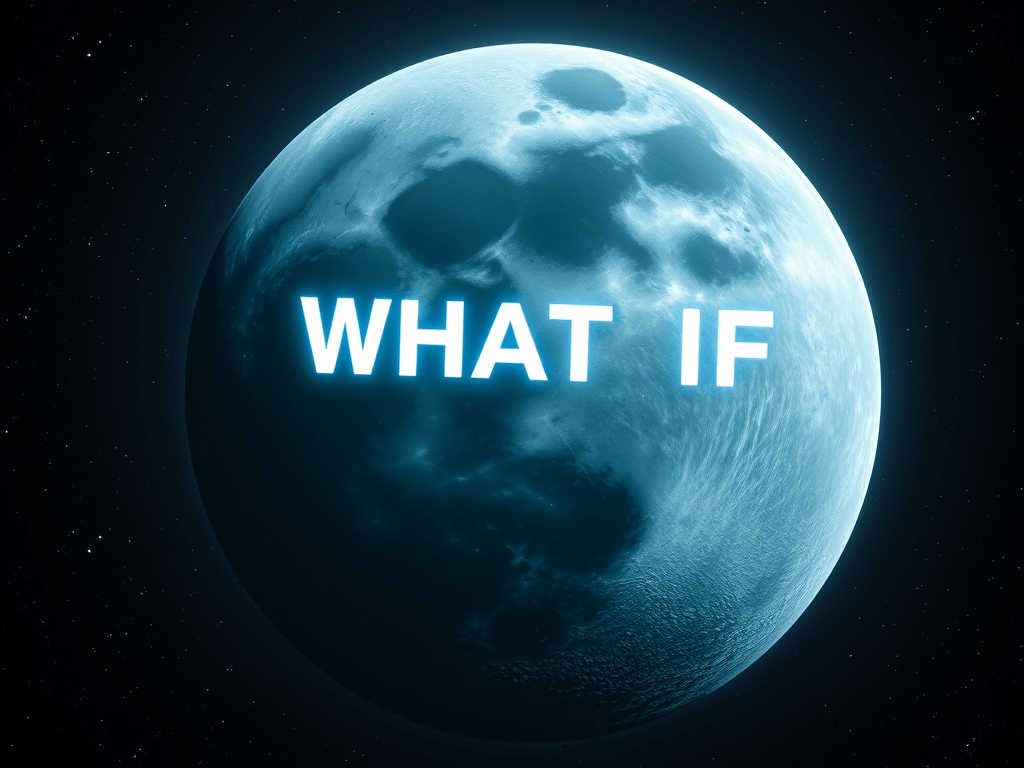
One moment you’re going about your day on Earth, the next you’re standing on the dusty surface of the Moon. The blue marble of Earth hangs in the pitch-black sky above you. Your heart races as you realize where you are. What would those 24 hours be like? Let’s take this cosmic journey together.
First Steps in a New World
The moment your boots touch the lunar surface, you’d feel oddly light, almost buoyant. With gravity just 1/6th of Earth’s, your body would suddenly weigh as much as a small child. Take a step, and you might accidentally leap several feet forward. Oops! The Apollo astronauts quickly learned that a strange bunny-hopping gait works best. “One giant leap” wasn’t just a poetic phrase—it was literally how they got around.
Of course, you’d need a spacesuit—that’s non-negotiable. Without one, you’d face the vacuum of space, where your blood would boil and your lungs would rupture in less than a minute. Not exactly a vacation highlight.
Endless Day or Endless Night
Forget about catching both a sunrise and sunset during your visit. The Moon rotates so slowly that a single lunar day stretches across 29.5 Earth days. Depending on when you arrive, you might experience either unrelenting daylight or the deepest darkness imaginable.
If you land during lunar daytime, the sun would beat down mercilessly in a black sky—a visual contradiction that messes with your mind. The ground beneath your feet would slowly heat up to a scorching 260°F (127°C). At night? Bundle up for a bone-chilling -280°F (-173°C). Your spacesuit would be working overtime to keep you from freezing solid or cooking like a lobster.
The temperature swing is so extreme because there’s no atmosphere to trap heat or distribute it evenly. In the shadows, even during daytime, temperatures can plummet to -50°F (-45°C) while just a few feet away in direct sunlight, it might be 180°F (82°C).
A World Without Sound
The silence would get to you. Really get to you.
Without air to carry sound waves, the Moon exists in perfect silence. Drop a rock, and you’d see it hit the ground without a sound. Jump up and down, and there’s no thud when you land. The only sounds you’d hear would be your own breathing, your heartbeat in your ears, and maybe the hum of your suit’s life support systems. It’s a silence so complete it feels almost solid.
The View That Changes Everything
The landscape sprawling before you would be otherworldly in the truest sense—a monochromatic palette of charcoal grays and brilliant whites. No blue skies. No clouds drifting by. No birds flying overhead. Just craters, mountains, and plains shaped by billions of years of meteor impacts.
And then there’s Earth—hanging in the sky four times larger than the Moon appears from Earth. You’d see the swirling white clouds, the deep blue oceans, and the continents where everyone you’ve ever known lives, all spinning slowly in the void. Astronauts call this perspective-shifting experience the “overview effect,” and it’s changed the outlook of everyone who’s experienced it.
Moonwalking (Not the Michael Jackson Kind)
Moving around would be both frustrating and hilarious. Your brain expects your body to behave one way, but lunar gravity has other plans. Try to run, and you might go tumbling in slow motion. Drop something, and it falls with dreamy slowness. Even picking up a rock requires recalibrating your sense of weight and effort.
The Moon’s surface is covered in a layer of fine dust called regolith. This isn’t your beach vacation sand—it’s sharp, abrasive, and clings to everything thanks to static electricity. The Apollo astronauts found it impossible to keep out of their lunar module. It would coat your suit, potentially jam your equipment, and if you could smell it (which you can’t through your helmet), it apparently has a gunpowder-like odor.
Your Science Playlist
Let’s say you came prepared with some basic scientific equipment. What could you do with your day? You might:
- Collect rocks that are billions of years older than the oldest Earth rocks
- Set up a simple experiment to measure the Moon’s barely-there magnetic field
- Test how far you can throw an object in lunar gravity (spoiler: really far)
- Leave footprints that will last millions of years in the unchanging lunar soil
- Measure the temperature difference between sunlight and shadow (a difference of potentially 230°F or 128°C within just a few feet)
With no wind, rain, or living things to disturb them, the marks you leave on the Moon would outlast most structures on Earth. Neil Armstrong’s famous boot print from 1969 still looks as fresh as the day it was made.
Coming Home Changed
As your 24 hours wind down and you prepare to return to Earth, you’d likely feel torn. Part of you would crave the comforts of home—fresh air, a shower to wash off the clingy moon dust, and the simple pleasure of drinking water without a straw in a helmet.
But another part of you would never want to leave. You’d have joined the most exclusive club in human history—the handful of people who’ve set foot on another world. The perspective you’d gain from standing on the Moon and looking back at our fragile blue home would fundamentally change how you see everything.
Back on Earth, you’d never look at the Moon the same way again. That glowing disk in the night sky would no longer be an abstract celestial object but a real place where you’ve left your footprints. Every time you’d spot it in the evening sky, you’d think, “I was there.”
And perhaps most profoundly, you’d return with a bone-deep appreciation for Earth itself—its breathable air, comfortable temperatures (even our most extreme environments rarely go below -128°F/-89°C or above 134°F/57°C), abundant water, and the glorious symphony of life that makes our planet so extraordinarily precious in the cosmic perspective.
After all, the greatest gift of visiting the Moon might be a deeper love for the world we call home.
 Cosmic Watchers
Leave a comment