Using a telescope is more than just pointing it at the sky and zooming in on cool things. It’s a journey into the past, a battle with Earth’s atmosphere, and sometimes even a test of patience. Whether you’re just starting out or you’ve been stargazing for years, here are some fun and surprising facts about using a telescope that might just change the way you see the universe.
Your Eyes Are Half the Battle
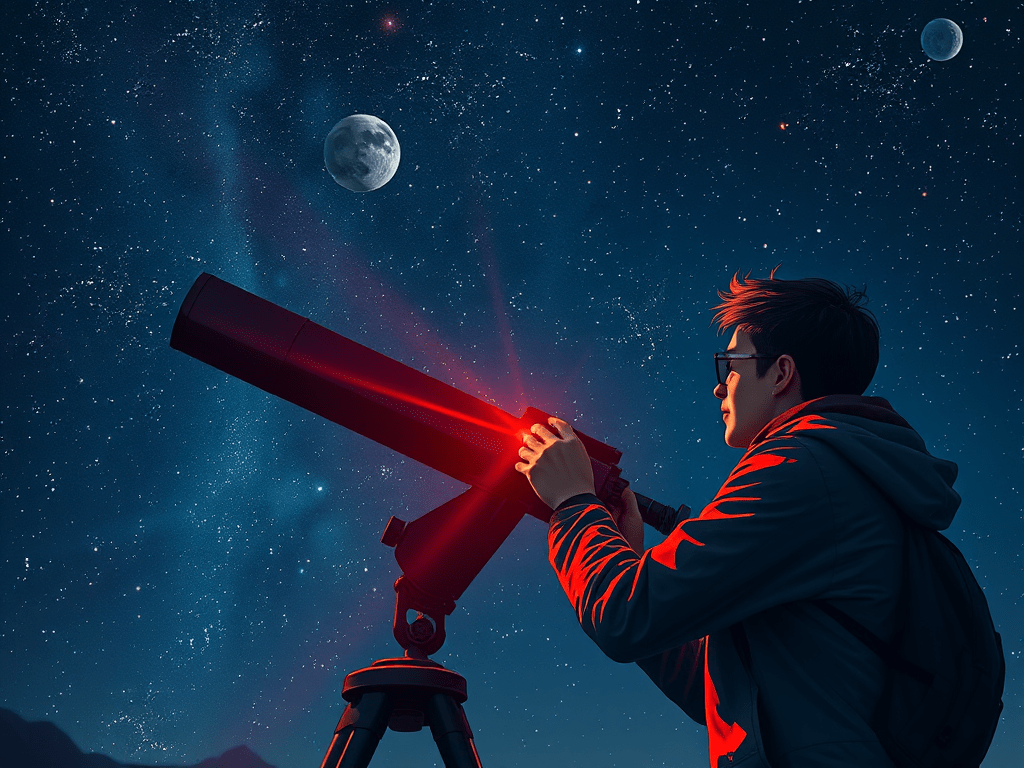
A telescope can show you incredible details, but your own eyes play a huge role in what you actually see. It takes about 30 minutes for your eyes to fully adjust to the dark, allowing you to pick up fainter details in space. That’s why experienced astronomers use red flashlights—they help you see your equipment without ruining your night vision.
The Moon Can Be Too Bright
You’d think that staring at the Moon through a telescope would always be a great idea, but when it’s full, it’s actually too bright. Some stargazers even wear sunglasses while observing it! The brightness can wash out details, so if you want to see the Moon’s craters in crisp detail, aim for a half or crescent Moon instead.
Telescopes Aren’t Just Giant Zoom Lenses
A common misconception is that telescopes work by just making things look bigger. In reality, their real job is to collect light. A small backyard telescope can pull in light from galaxies millions of light-years away, revealing objects that are completely invisible to the naked eye.
The Air Above You Can Ruin a Perfect View
Ever noticed how stars twinkle? That’s atmospheric turbulence, and it can make things look wobbly through a telescope. On some nights, it can feel like you’re looking at Saturn through water. This is why professional observatories are built on mountaintops or even in space—less air means clearer views.
Galileo Thought Saturn Had “Ears”
When Galileo first turned his telescope to Saturn in 1610, he couldn’t quite make out the rings. Instead, he described the planet as having “ears” because his telescope wasn’t powerful enough to resolve them properly. It wasn’t until later, with better optics, that astronomers realized Saturn had an entire system of rings.
You Can Spot Space Junk
Not everything you see in the night sky is a star or a planet. With a small telescope, you can track satellites and even catch glimpses of space debris—old rocket parts, defunct satellites, and other remnants of humanity’s journey into space. Some of them even reflect sunlight and flare up for a few seconds as they pass overhead.
Some of the Best Telescopes Are in Space
Earth’s atmosphere blocks a lot of light, especially in ultraviolet and X-ray wavelengths. That’s why we send telescopes like Hubble and James Webb into space—so they can get an unobstructed view of the universe. Even backyard astronomers notice the difference: a telescope in a dark desert will always outperform one in a city, no matter how powerful it is.
You Can See Millions of Years into the Past
When you look at the Andromeda Galaxy through a telescope, you’re seeing it as it was 2.5 million years ago. That means the light hitting your eye tonight left Andromeda when early humans were just figuring out how to use stone tools. Every time you look at a distant galaxy, you’re essentially time-traveling.
Using a telescope isn’t just about seeing cool things in space—it’s about understanding how vast and mysterious the universe really is. The more you observe, the more you realize how much there is to discover. So next time you set up your telescope, take a moment to appreciate just how incredible it is to peer into the cosmos from your own backyard.
 Cosmic Watchers
Leave a comment