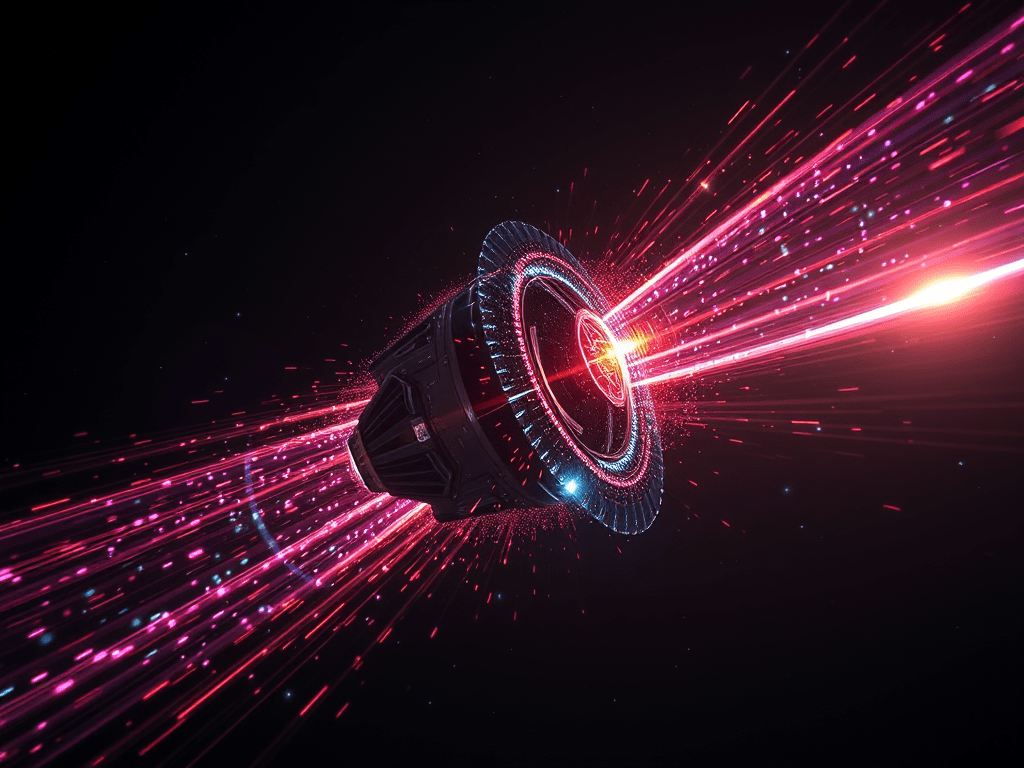
When it comes to long-term human space exploration, radiation is one of the biggest threats we face. Outside Earth’s protective atmosphere and magnetic field, astronauts are exposed to dangerous levels of cosmic radiation and solar energetic particles. This raises an intriguing question: could we build an artificial magnetic field on spacecraft to mimic Earth’s protective shield?
Earth’s Magnetic Armor
Earth’s magnetosphere acts like an invisible force field. Generated by the movement of molten iron in the planet’s outer core, this magnetic field deflects charged particles from the solar wind and cosmic rays, directing them around the planet. Without it, life as we know it could not survive on the surface for long. Mars, for example, lacks a strong magnetic field and has a much thinner atmosphere—two key reasons it’s so inhospitable to life.
The Radiation Problem in Space
When astronauts travel beyond low Earth orbit—such as on missions to the Moon or Mars—they leave the safety of our magnetosphere behind. Spacecraft traveling through deep space are bombarded by galactic cosmic rays (GCRs), which are highly energetic particles originating from outside the solar system, and by solar energetic particles (SEPs) during solar flares and coronal mass ejections. Prolonged exposure can damage DNA, increase cancer risk, and cause acute radiation sickness.
Building a Magnetic Shield: Is It Possible?
In theory, yes—creating a magnetic field around a spacecraft could deflect some of these harmful particles, just as Earth’s field does. Several studies and experimental designs have explored this idea. Here are a few concepts:
1. Superconducting Magnets
One proposal involves placing large superconducting coils around a spacecraft. These coils could generate a magnetic bubble that deflects charged particles. However, there are major engineering challenges:
- Size and weight: Superconducting systems are massive and require cooling to extremely low temperatures.
- Power demands: Creating and maintaining a strong enough magnetic field takes substantial energy.
- Safety concerns: Strong magnetic fields can interfere with onboard electronics and even affect human biology.
2. Mini-Magnetospheres
Another idea is to use plasma-based systems to simulate a small-scale magnetosphere. By injecting plasma into a magnetic field generated onboard, a spacecraft might be able to create a controlled bubble that deflects incoming radiation. This concept has been tested on a small scale in lab environments, such as the European Space Agency’s “Mini-Magnetosphere Plasma Propulsion” project.
3. Electrostatic Shields
Though not magnetic, electrostatic shields use high-voltage fields to repel charged particles. This approach also faces technical hurdles, especially managing the large voltages safely in a space environment.
Reality Check: Where We Are Today
While artificial magnetic fields are scientifically plausible, we’re not quite there yet technologically. The hardware needed is still too bulky and energy-intensive for most missions. For now, space agencies rely on a combination of physical shielding (like layers of polyethylene), mission planning (to avoid solar storms), and habitat design (such as radiation shelters in spacecraft and lunar bases).
The Future of Radiation Protection
If humanity is serious about long-term space travel or colonizing Mars, solutions like artificial magnetic fields may be necessary. Research continues into lighter materials, more efficient superconductors, and new shielding technologies. A hybrid approach—combining passive shielding with active magnetic or electrostatic fields—may end up being the best way forward.
Final Thought
The idea of building our own magnetic shield may sound like science fiction today, but Earth’s own magnetic field once seemed like a mystical phenomenon too. As technology advances, artificial magnetospheres may become an essential part of space travel—our very own portable force fields for surviving the cosmic frontier.
 Cosmic Watchers
Leave a comment