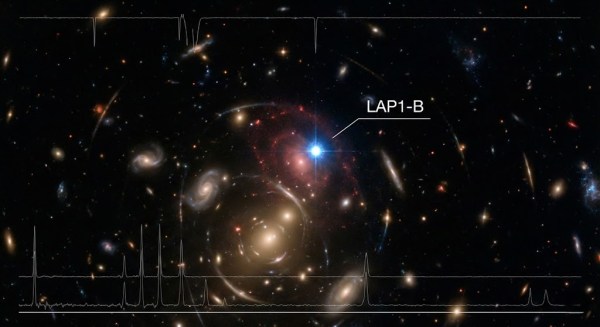
By Cosmic Watcher | December 16, 2025 It is a problem that has annoyed astronomers for twenty years: How did the universe get so heavy, so fast? According to standard physics, black holes need time to grow. They start small—perhaps 10 to 100 times the mass of our Sun—and slowly feed on gas or merge... Continue Reading →
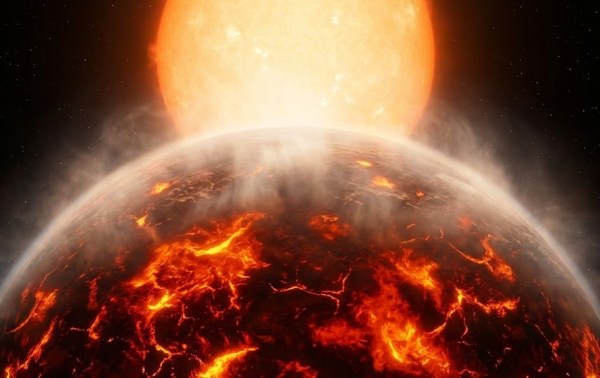
The Steam Above the Magma: How TOI-561 b is Defying the Rules of planetary Science
By Cosmic Watchers | December 16, 2025 In the search for habitable worlds, we usually look for "Earth 2.0"—blue oceans, green land, and fluffy clouds. TOI-561 b is the opposite of that in every way. It is a Super-Earth with a surface temperature of 3,100°F (1,700°C), likely covered in a global ocean of molten lava.... Continue Reading →
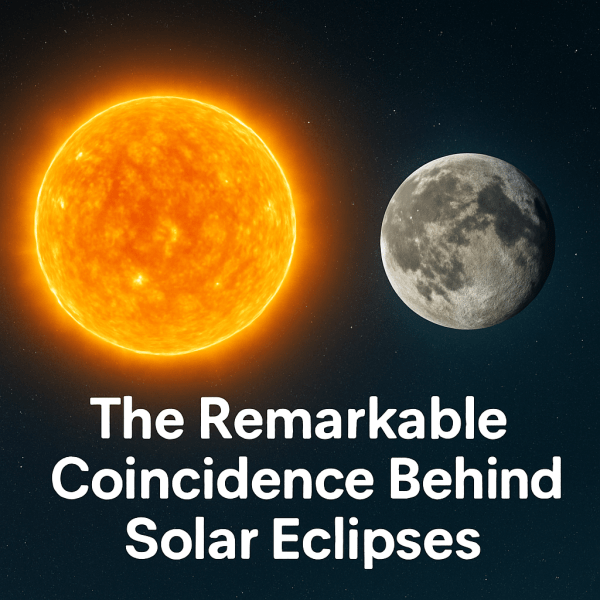
The Remarkable Coincidence Behind Solar Eclipses — And What Happens When the Moon Drifts Away
For as long as people have watched the sky, the Sun and Moon have shaped our sense of time, season, and wonder. Among all the sights our ancestors passed down through stories and observations, few feel as striking—and almost uncanny—as a total solar eclipse. One simple astronomical coincidence makes it possible: the Moon appears almost... Continue Reading →
What If We’re Actually From Mars?
What If? Here’s a weird thought: our bodies might be hinting that we aren’t originally from Earth. Everyone knows Earth spins once every 24 hours. That’s what we base our entire lives on—day, night, sleep, work, everything. But when scientists take people and stick them in places where they can’t see the sun and don’t... Continue Reading →
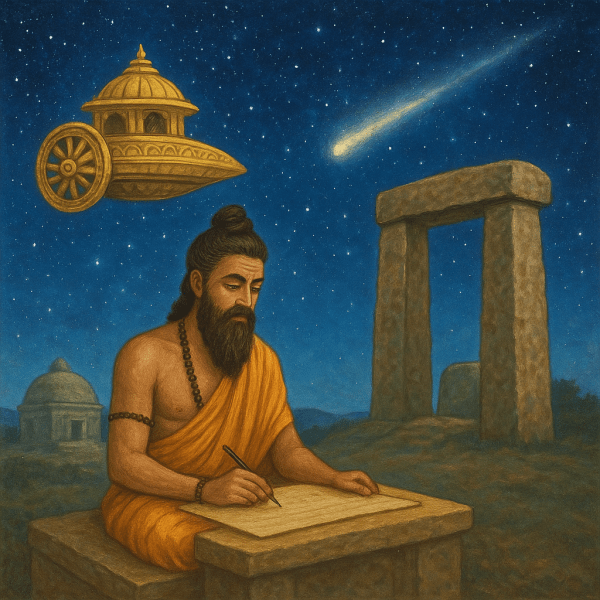
Ancient Skies Part VI – India and the Vedic Skies
India’s ancient texts are among the richest sources of celestial lore. The Vedas, epics like the Mahabharata, and later Sanskrit works describe not only constellations and rituals tied to the stars, but also strange tales of flying machines and heavenly weapons. The Vedic Star Traditions Vedic priests were keen observers of the heavens. They tracked... Continue Reading →
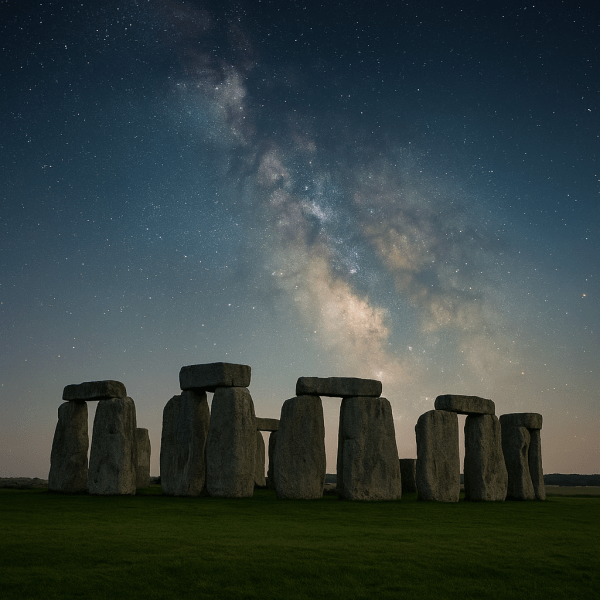
Ancient Skies Part V – Stonehenge and the Megalith Builders
Across Europe, from the windswept plains of Salisbury to the green hills of Ireland, massive stone monuments stand as silent witnesses to humanity’s fascination with the sky. Stonehenge, Newgrange, and countless megalithic structures remind us that ancient people were not only builders of stone but also architects of cosmic observatories. Stonehenge – A Celestial Calendar... Continue Reading →
Ancient Skies Part IV – The Americas: Hopi, Nazca, and Beyond
Across the vast landscapes of the Americas, ancient peoples gazed at the heavens and built traditions, monuments, and myths rooted in the movement of the stars. From the deserts of Arizona to the high plains of Peru, we find both prophecy and mystery—stories of sky messengers, celestial cycles, and markings upon the earth visible only... Continue Reading →
Ancient Skies Part III: The Maya and the Cosmic Calendar
If any civilization could be called masters of time, it was the Maya. Living in Mesoamerica over a thousand years ago, they built towering temples, advanced cities, and most famously, a calendar system so precise it still amazes researchers today. For the Maya, the heavens were not distant lights but active forces shaping the destiny... Continue Reading →
Ancient Skies Part II: Egypt and the Stars of Orion
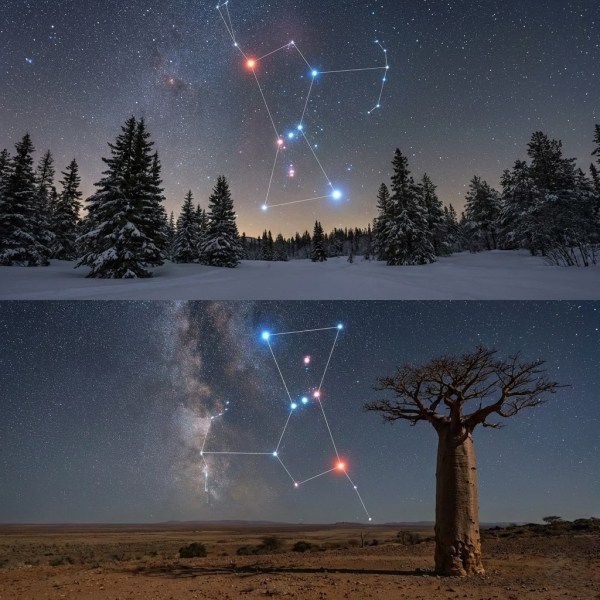
Few civilizations are as closely tied to the heavens as ancient Egypt. To the people of the Nile, the stars were not just distant lights — they were divine guides, linked to gods, the afterlife, and the eternal order of the universe. Among all constellations, one stood out above the rest: Orion. The Cosmic Blueprint... Continue Reading →
Ancient Skies Part I: The Sumerians and the Anunnaki
When we look back at the world’s first great civilizations, few stand out like Sumer, the cradle of Mesopotamia. Rising nearly 6,000 years ago in the fertile land between the Tigris and Euphrates rivers, the Sumerians left behind not only some of the earliest writing but also the first known records of the stars. Their... Continue Reading →