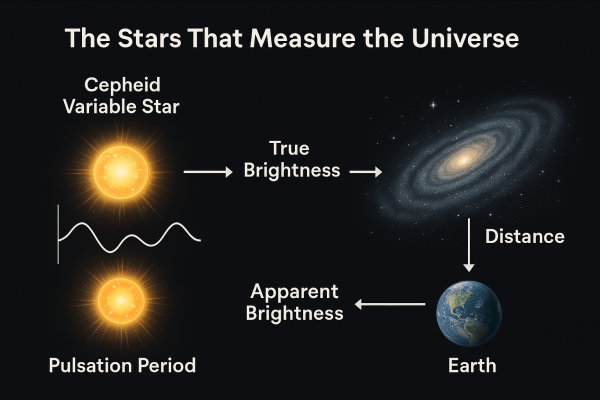
Cepheid variable stars, or just Cepheids, are stars that pulse in brightness like a cosmic heartbeat. What makes them special? Their pulsation period (how often they get brighter and dimmer) is directly linked to how truly bright they are. That simple fact allows astronomers to measure distance in space. By timing a Cepheid’s pulse and... Continue Reading →
Fun and Surprising Facts About Using a Telescope
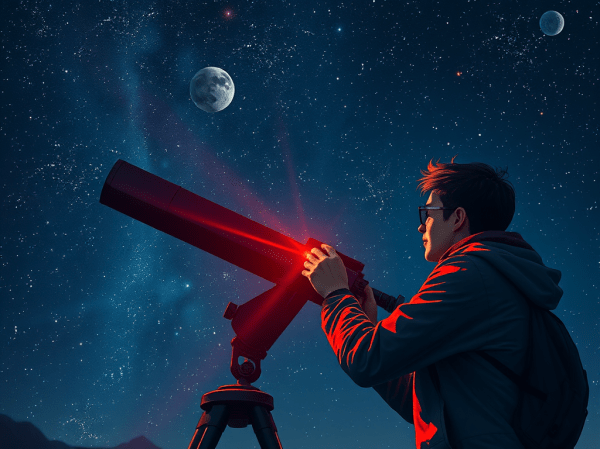
Using a telescope is more than just pointing it at the sky and zooming in on cool things. It’s a journey into the past, a battle with Earth’s atmosphere, and sometimes even a test of patience. Whether you’re just starting out or you’ve been stargazing for years, here are some fun and surprising facts about... Continue Reading →
The Hidden Abyss: The Black Hole Lurking in Cygnus X-1
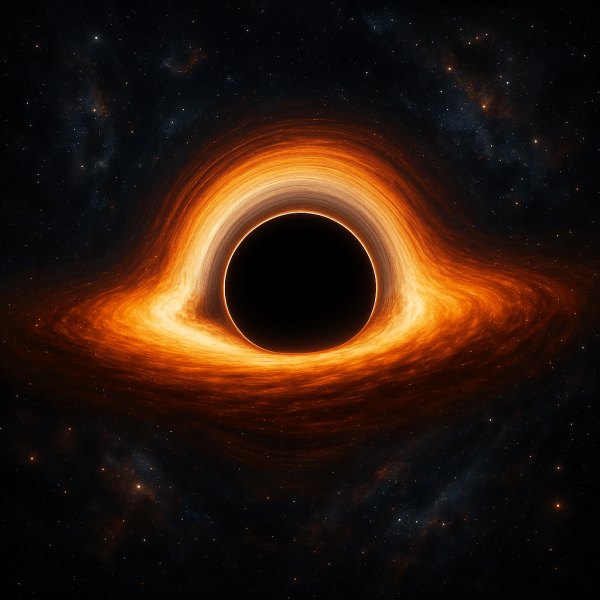
Imagine pointing your backyard telescope toward the constellation Cygnus on a crisp, clear night. You sweep across the starry sky and settle on a faint, twinkling point of light—a supergiant star known as HDE 226868. To your eyes, it’s just another star, a distant beacon in the cosmic sea. But here’s the twist: while you’re... Continue Reading →
What If the Moon Were the Size of Jupiter?
Imagine stepping outside at night and looking up—not at the familiar glowing Moon, but at an enormous celestial giant, as big as Jupiter, dominating the sky. Its swirling clouds and massive storms stretch across the heavens, filling half the sky with an overwhelming presence. But the breathtaking view is just the beginning—because life on Earth... Continue Reading →
My Battery is Low and It’s Dark: A Rover’s Incredible Odyssey
Imagine being alone on a desolate, rust-colored planet, 140 million miles from home. No sound. No movement. Just endless dust and silence. This was the world of Opportunity, a robotic explorer that became more than just a machine – it became a hero of human exploration. The Little Rover That Could When Opportunity first touched... Continue Reading →
Traveling Across Galaxies: A Journey to M33 and M31
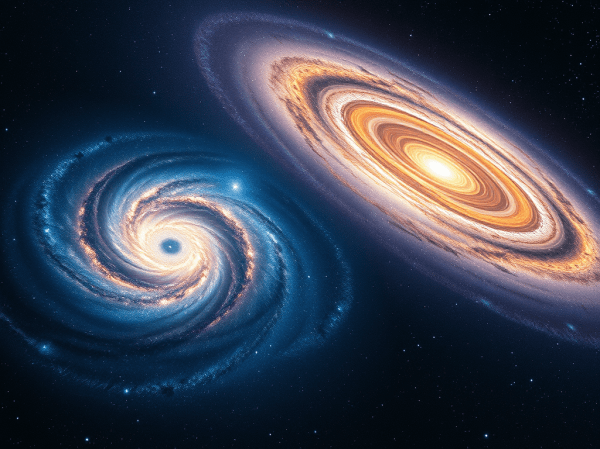
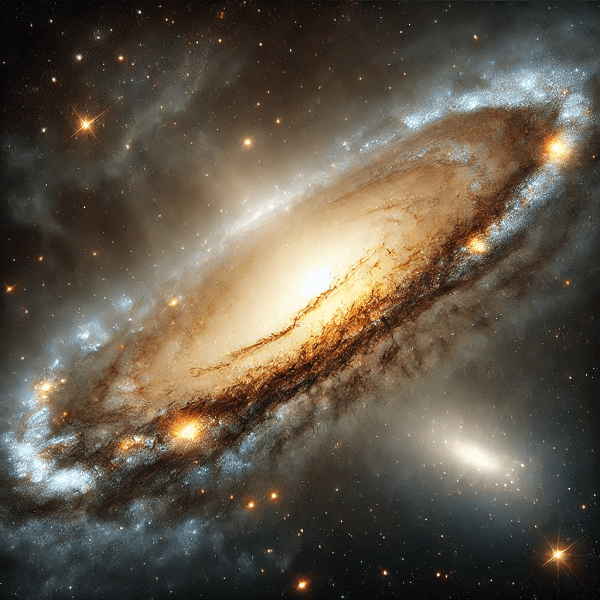
Understanding the Vastness of Space When considering intergalactic travel, distances become nearly incomprehensible. The Milky Way is just one of billions of galaxies in the universe, and our closest galactic neighbors—Andromeda (M31) and Triangulum (M33)—are still millions of light-years away. What is a Light-Year? A light-year is the distance that light travels in one year... Continue Reading →
Oxygen in a Distant Galaxy: A Glimpse into the Universe’s Wild Youth
Astronomers recently confirmed JADES-GS-z14-0 as the most distant galaxy identified, located 13.4 billion light-years away. Its discovery of significant oxygen levels challenges prior assumptions about the universe's early development. Utilizing the James Webb Space Telescope and ALMA, researchers revealed the galaxy's advanced evolution, suggesting a more complex early universe than previously believed.
What If You Were Placed on the Moon for a Day
The experience of spending 24 hours on the Moon would be surreal and transformative. You would navigate its low gravity, encounter extreme temperature variations, and endure profound silence. The view of Earth would evoke a deep appreciation for our planet. Ultimately, this journey would instill a lasting sense of wonder and connection to home.
The Fermi Paradox: Where Is Everybody?
In the vast expanse of our universe, with its hundreds of billions of galaxies each containing hundreds of billions of stars, a profound question emerges: Where is everyone? This seemingly simple question forms the heart of what we call the Fermi Paradox, named after physicist Enrico Fermi who famously asked, "Where are they?" during a... Continue Reading →
Epic Moon Walk
How Long Would It Take a Person to Walk Around the Moon? The Moon isn’t exactly set up for a casual hike, but let’s say you could just get up and start walking. How long would it take to hoof it all the way around? Well, that depends on a few things—like terrain, spacesuit limitations,... Continue Reading →