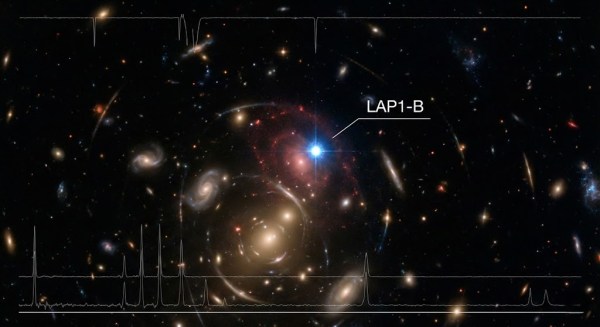
By Cosmic Watcher | December 16, 2025 It is a problem that has annoyed astronomers for twenty years: How did the universe get so heavy, so fast? According to standard physics, black holes need time to grow. They start small—perhaps 10 to 100 times the mass of our Sun—and slowly feed on gas or merge... Continue Reading →
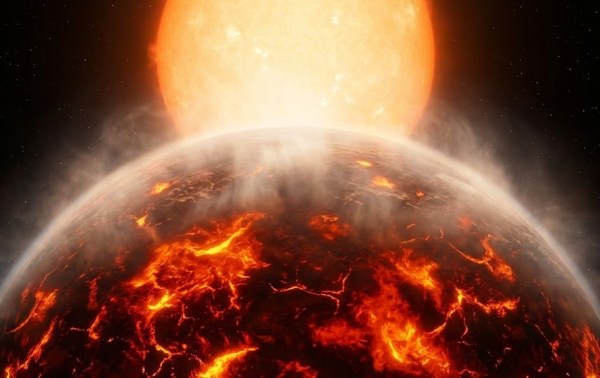
The Steam Above the Magma: How TOI-561 b is Defying the Rules of planetary Science
By Cosmic Watchers | December 16, 2025 In the search for habitable worlds, we usually look for "Earth 2.0"—blue oceans, green land, and fluffy clouds. TOI-561 b is the opposite of that in every way. It is a Super-Earth with a surface temperature of 3,100°F (1,700°C), likely covered in a global ocean of molten lava.... Continue Reading →
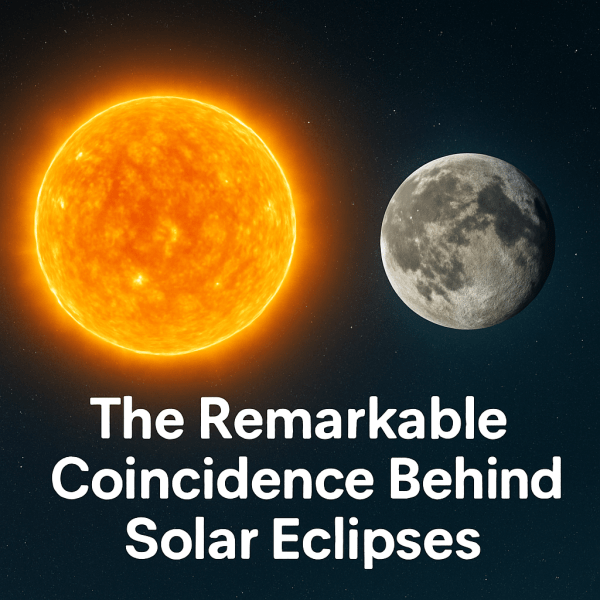
The Remarkable Coincidence Behind Solar Eclipses — And What Happens When the Moon Drifts Away
For as long as people have watched the sky, the Sun and Moon have shaped our sense of time, season, and wonder. Among all the sights our ancestors passed down through stories and observations, few feel as striking—and almost uncanny—as a total solar eclipse. One simple astronomical coincidence makes it possible: the Moon appears almost... Continue Reading →
What If Earth Is the First?
When we gaze up at the stars, we assume we are late to the party. The universe is ancient—more than 13.8 billion years old. Our Sun, in contrast, is a mere 4.6 billion years old, and humanity has existed for only the final blink of that span. Surely, we reason, if life could arise here,... Continue Reading →
The Milky Way: A Galactic Dance at 600 km/s and the Mystery of “Flapping Wings”
The Milky Way, our cosmic home, is not a static entity. It's hurtling through space at roughly 600 km/s relative to the cosmic microwave background. But beyond this rapid motion, intriguing observations have led astronomers to speculate about another dynamic behavior: the "flapping" of its spiral arms. The Galactic Motion The Milky Way is part... Continue Reading →
Could Artificial Magnetic Fields Shield Spacecraft from Cosmic Radiation?
When it comes to long-term human space exploration, radiation is one of the biggest threats we face. Outside Earth's protective atmosphere and magnetic field, astronauts are exposed to dangerous levels of cosmic radiation and solar energetic particles. This raises an intriguing question: could we build an artificial magnetic field on spacecraft to mimic Earth’s protective... Continue Reading →
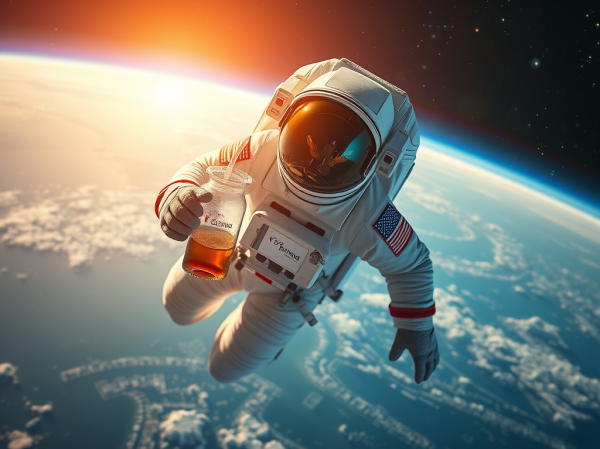
Can Cosmonauts Drink in Open Space?
Imagine floating above Earth, stars twinkling beyond your visor, and suddenly—you’re thirsty. But you're in a spacesuit. In the vacuum of space. So… how do you take a sip? Is drinking in open space even possible? Let’s dive into this wonderfully weird question. First, What Is Open Space? “Open space” means the environment outside the... Continue Reading →
Earth Is Leaking Its Atmosphere—And Cosmic Watchers Are Here to Witness It
It might sound like science fiction, but it’s happening right now: Earth is slowly losing its atmosphere to space, and the escape is led by the universe’s lightest element—hydrogen. This invisible leak is ongoing, unstoppable, and could eventually reshape the fate of our planet. At Cosmic Watchers, we explore these slow cosmic events that most... Continue Reading →
What If Earth and Mars Switched Places?
Imagine waking up on a planet that’s no longer in the same neighborhood of the solar system. Earth is now the fourth planet from the Sun, and Mars has taken Earth’s current place as the third. This planetary swap might sound like science fiction, but it opens up fascinating possibilities—and terrifying consequences. Let’s explore what... Continue Reading →
Alpha Centauri: Our Next Door Neighbor in the Stars
By Cosmic Watchers When we look up at the night sky, most of the stars we see are many light-years away. But just 4.37 light-years from Earth lies Alpha Centauri, the closest star system to our solar system—and one of the most intriguing prospects for interstellar exploration. The Triple-Star System Alpha Centauri is not a... Continue Reading →