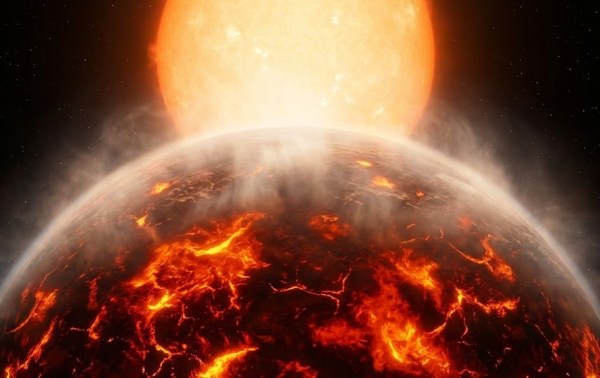
By Cosmic Watchers | December 16, 2025 In the search for habitable worlds, we usually look for "Earth 2.0"—blue oceans, green land, and fluffy clouds. TOI-561 b is the opposite of that in every way. It is a Super-Earth with a surface temperature of 3,100°F (1,700°C), likely covered in a global ocean of molten lava.... Continue Reading →
Could Artificial Magnetic Fields Shield Spacecraft from Cosmic Radiation?
When it comes to long-term human space exploration, radiation is one of the biggest threats we face. Outside Earth's protective atmosphere and magnetic field, astronauts are exposed to dangerous levels of cosmic radiation and solar energetic particles. This raises an intriguing question: could we build an artificial magnetic field on spacecraft to mimic Earth’s protective... Continue Reading →
Can You Take a Shower in Space? Life Without Gravity on the ISS
We take showers for granted here on Earth, where gravity obediently pulls water downward and drains whisk it away. But what happens when you leave gravity behind? Can astronauts take showers in space? Could they even climb into a water-filled rubber bath like on Earth? The answers are both fascinating and a little weird. Hygiene... Continue Reading →
SpaceNet: Internet on the ISS, the Moon, and Mars
In today’s hyper-connected world, the idea of being offline feels almost unthinkable. But what happens when we leave Earth behind? Is there internet access on the International Space Station (ISS)? Can astronauts get online on the Moon—or even Mars? Let’s explore how internet connectivity works in space today, and what the future holds for communication... Continue Reading →
A Cosmic Pit Stop: NASA’s Lucy Spacecraft to Visit Asteroid Donaldjohanson on April 20, 2025
Get ready for a stellar road trip! On April 20, 2025, NASA’s Lucy spacecraft will zoom past asteroid 52246 Donaldjohanson, marking the second stop on its ambitious 12-year journey through the solar system. Launched in October 2021, Lucy is on a mission to explore the Trojan asteroids—mysterious space rocks that share Jupiter’s orbit around the... Continue Reading →
Soyuz Rocket Set to Launch Tomorrow for the ISS
Tomorrow, April 8, 2025, a Soyuz rocket will blast off from the Baikonur Cosmodrome in Kazakhstan, carrying a crew to the International Space Station (ISS) as part of the Soyuz MS-27 mission. Scheduled for 1:47 a.m. EDT (5:47 a.m. UTC), this launch will see NASA astronaut Jonny Kim and Roscosmos cosmonauts Sergey Ryzhikov and Alexey... Continue Reading →
Fun and Surprising Facts About Using a Telescope
Using a telescope is more than just pointing it at the sky and zooming in on cool things. It’s a journey into the past, a battle with Earth’s atmosphere, and sometimes even a test of patience. Whether you’re just starting out or you’ve been stargazing for years, here are some fun and surprising facts about... Continue Reading →
The Hidden Abyss: The Black Hole Lurking in Cygnus X-1
Imagine pointing your backyard telescope toward the constellation Cygnus on a crisp, clear night. You sweep across the starry sky and settle on a faint, twinkling point of light—a supergiant star known as HDE 226868. To your eyes, it’s just another star, a distant beacon in the cosmic sea. But here’s the twist: while you’re... Continue Reading →
My Battery is Low and It’s Dark: A Rover’s Incredible Odyssey
Imagine being alone on a desolate, rust-colored planet, 140 million miles from home. No sound. No movement. Just endless dust and silence. This was the world of Opportunity, a robotic explorer that became more than just a machine – it became a hero of human exploration. The Little Rover That Could When Opportunity first touched... Continue Reading →
Traveling Across Galaxies: A Journey to M33 and M31
Understanding the Vastness of Space When considering intergalactic travel, distances become nearly incomprehensible. The Milky Way is just one of billions of galaxies in the universe, and our closest galactic neighbors—Andromeda (M31) and Triangulum (M33)—are still millions of light-years away. What is a Light-Year? A light-year is the distance that light travels in one year... Continue Reading →