The Pleiades, a striking star cluster in Taurus, captivates cultures and astronomers alike. Comprising young stars and rich mythology, it’s crucial for stellar studies and cosmic exploration.
Exploring the Pleiades Star Cluster

Extraterrestrial News & Deep Space Exploration
The Pleiades, a striking star cluster in Taurus, captivates cultures and astronomers alike. Comprising young stars and rich mythology, it’s crucial for stellar studies and cosmic exploration.

Exploring beyond Mars, we find giant planets and their moons, particularly Europa, a potentially life-hosting moon of Jupiter. Covered in ice, it may harbor a hidden ocean teeming with life, similar to Earth's icy regions. Upcoming missions aim to uncover signs of life, marking Europa as a key focus in extraterrestrial research.

On January 25, 2024, an asteroid passed closer to Earth than expected, reminding us of the ever-present threat of near-Earth objects (NEOs). While not an immediate danger, its unexpected flyby raises concerns about our ability to track asteroids in time. How Close Did It Get? The asteroid, designated 2024 YR4, passed within approximately 830,000 km... Continue Reading →
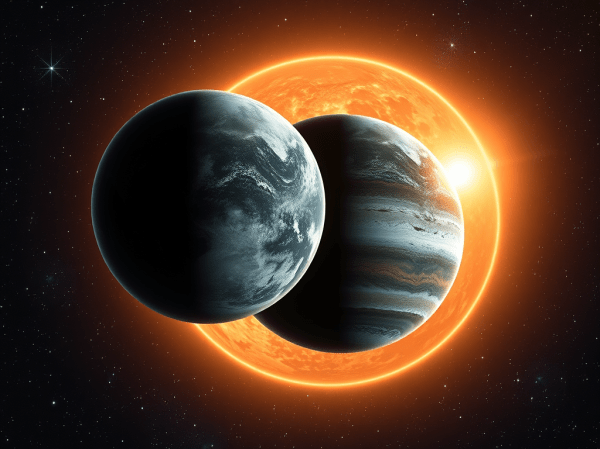
HD 101581 is a K-type main-sequence star located approximately 41.7 light-years away in the constellation Centaurus. With an apparent magnitude of 7.77, it is not visible to the naked eye but can be observed with small telescopes. This relatively close star has attracted scientific interest due to the discovery of two Earth-sized exoplanets, HD 101581... Continue Reading →
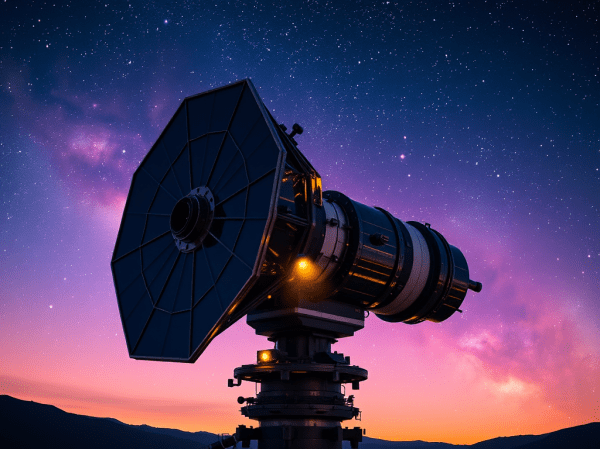
James Webb Won't Discover Exoplanets? Think Again! Many believe the James Webb Space Telescope (JWST) won’t be discovering new planets—and they’re mostly right! But JWST’s true strength lies in something even more crucial: unlocking the secrets of known exoplanets. Unlike smaller telescopes that find new worlds, JWST specializes in analyzing their atmospheres, detecting elements like carbon dioxide and methane, and even identifying potential ocean-covered planets. Its work is revolutionizing our understanding of alien worlds, bringing us closer to finding habitable planets beyond Earth. Want to know how? Read on!

Are stars not visible in space? When we see photos taken from the International Space Station (ISS) or during the Apollo moon landings, one thing seems to be missing—stars! These images show astronauts, spacecraft, and planetary surfaces, but the vast cosmos appears completely black. This has led some to question: Are stars not visible in... Continue Reading →
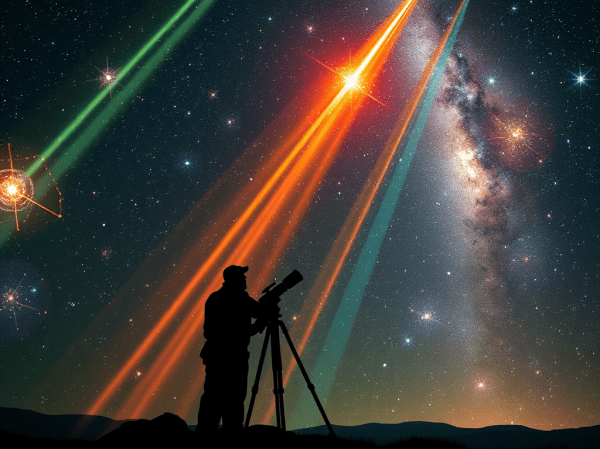
For years, we've searched the skies, listening for radio signals that might reveal alien life. But what if we're listening the wrong way? As Earth shifted from radio waves to fiber-optic light signals, could advanced civilizations have done the same? Every day, mysterious bursts of light and energy reach us from the cosmos—perhaps they hold messages we've yet to understand. If we expand our search beyond radio waves, we might finally uncover the voices of the universe

Flying on Titan: A Dreamlike Adventure Imagine standing on Titan, Saturn’s largest moon—bigger than Mercury. The sky is orange, the ground icy. Now, picture yourself with wings. You spread them wide, take a leap, and start flying. Easy Flying Titan’s thick air and low gravity make flying simple. The atmosphere is 1.45 times thicker than... Continue Reading →

Is Travel to Mars Really Possible? The Radiation Challenge Going to Mars has been a dream for a long time. It’s the most realistic place for humans to set up a new home, but there’s one huge problem—radiation. Earth’s atmosphere does an amazing job of shielding us from harmful space radiation. If you could squeeze... Continue Reading →

Introduction Imagine a world where the ground is constantly reshaped by explosive volcanic eruptions, where rivers of molten lava carve fiery pathways across an alien landscape. Welcome to Io, Jupiter’s hellish moon and the most volcanically active body in the solar system. Discovered by Galileo Galilei in 1610, this celestial powerhouse is a chaotic realm... Continue Reading →
 Cosmic Watchers