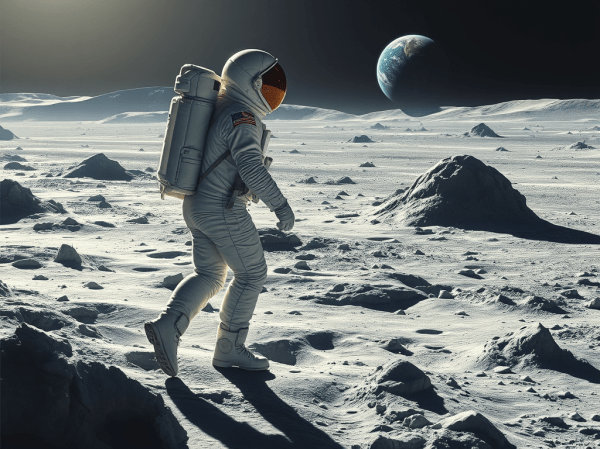
The experience of spending 24 hours on the Moon would be surreal and transformative. You would navigate its low gravity, encounter extreme temperature variations, and endure profound silence. The view of Earth would evoke a deep appreciation for our planet. Ultimately, this journey would instill a lasting sense of wonder and connection to home.
The Fermi Paradox: Where Is Everybody?
In the vast expanse of our universe, with its hundreds of billions of galaxies each containing hundreds of billions of stars, a profound question emerges: Where is everyone? This seemingly simple question forms the heart of what we call the Fermi Paradox, named after physicist Enrico Fermi who famously asked, "Where are they?" during a... Continue Reading →
Epic Moon Walk
How Long Would It Take a Person to Walk Around the Moon? The Moon isn’t exactly set up for a casual hike, but let’s say you could just get up and start walking. How long would it take to hoof it all the way around? Well, that depends on a few things—like terrain, spacesuit limitations,... Continue Reading →
Asteroid 2024 YR4: Could It Hit the Moon in 2032?
There's a new space rock in town—2024 YR4—and while it's got a tiny chance of hitting Earth, I'm way more interested in the possibility of it smacking into the Moon. Not because I want destruction (okay, maybe a little), but because it would be an amazing scientific opportunity. Could 2024 YR4 Strike the Moon? Right... Continue Reading →
Antigravity Explained: The Science, Theories, and Future Possibilities
Antigravity is one of those ideas that keeps coming up in both science fiction and real scientific discussions. The ability to cancel out or push back against gravity would completely change how we travel, explore space, and use energy. While we don't have a working technology that creates true antigravity yet, scientists and engineers are... Continue Reading →
Betelgeuse: The Dying Giant of Orion
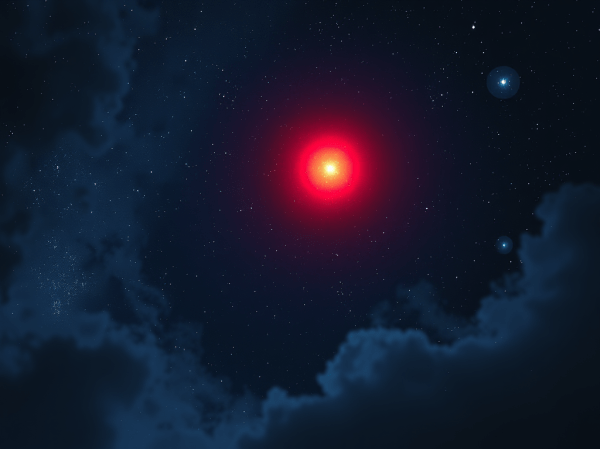
Betelgeuse, a red supergiant in Orion, is nearing the end of its life and may explode in a supernova, creating a spectacular celestial display. Its explosion will be brighter than the Moon and visible during the day. Despite its power, it poses no threat to Earth, offering a unique opportunity for scientific study.
The Earth’s Magnetic Field and the Radiation Dip Over Brazil
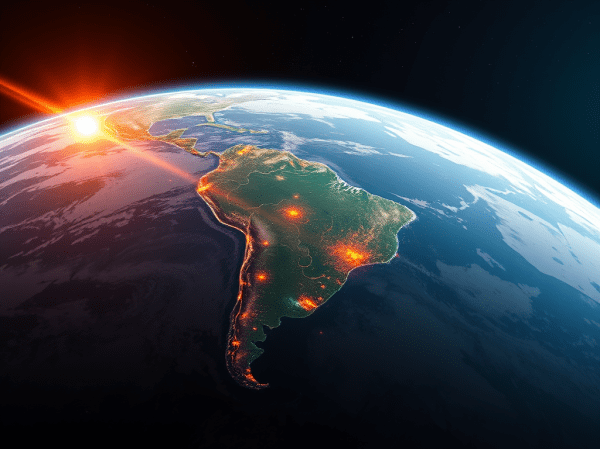
The Earth's magnetic field serves as a crucial shield, protecting our planet from the relentless bombardment of cosmic rays and charged particles emitted by the Sun. This invisible force, generated by the movement of molten iron in the Earth's outer core, extends far into space, forming a protective bubble known as the magnetosphere. However, this... Continue Reading →
Why Are Stars So Hot? The Process Explained
Why Are Stars Hot? Stars are fiery giants because of gravity and nuclear fusion. If a mass of gas—at least 80 times Jupiter’s size—collapses under its own gravity, the intense pressure ignites fusion, turning hydrogen into helium and releasing enormous energy. This process generates immense heat and light, making stars shine for billions of years.... Continue Reading →
Gravity and Time: How Your Altitude Affects the Flow of Time
Time is not as constant as we might think. While we experience it as a steady progression of seconds and minutes, physics tells us otherwise. The force of gravity actually changes the scale of time, making it flow differently depending on where you are. This means that even in a tall building, time moves at... Continue Reading →
Exploring the Pleiades Star Cluster
The Pleiades, a striking star cluster in Taurus, captivates cultures and astronomers alike. Comprising young stars and rich mythology, it’s crucial for stellar studies and cosmic exploration.